Field Notes
Fungi Log
Autumn 2026
Fungi finds of Autumn 2026
Giant Polypore
14 September
Facts
Latin: Meripilus giganteus
Size: Rosettes to 50cm+
Habitat: Base of beech/oak
Note: Pale flesh bruises black within minutes
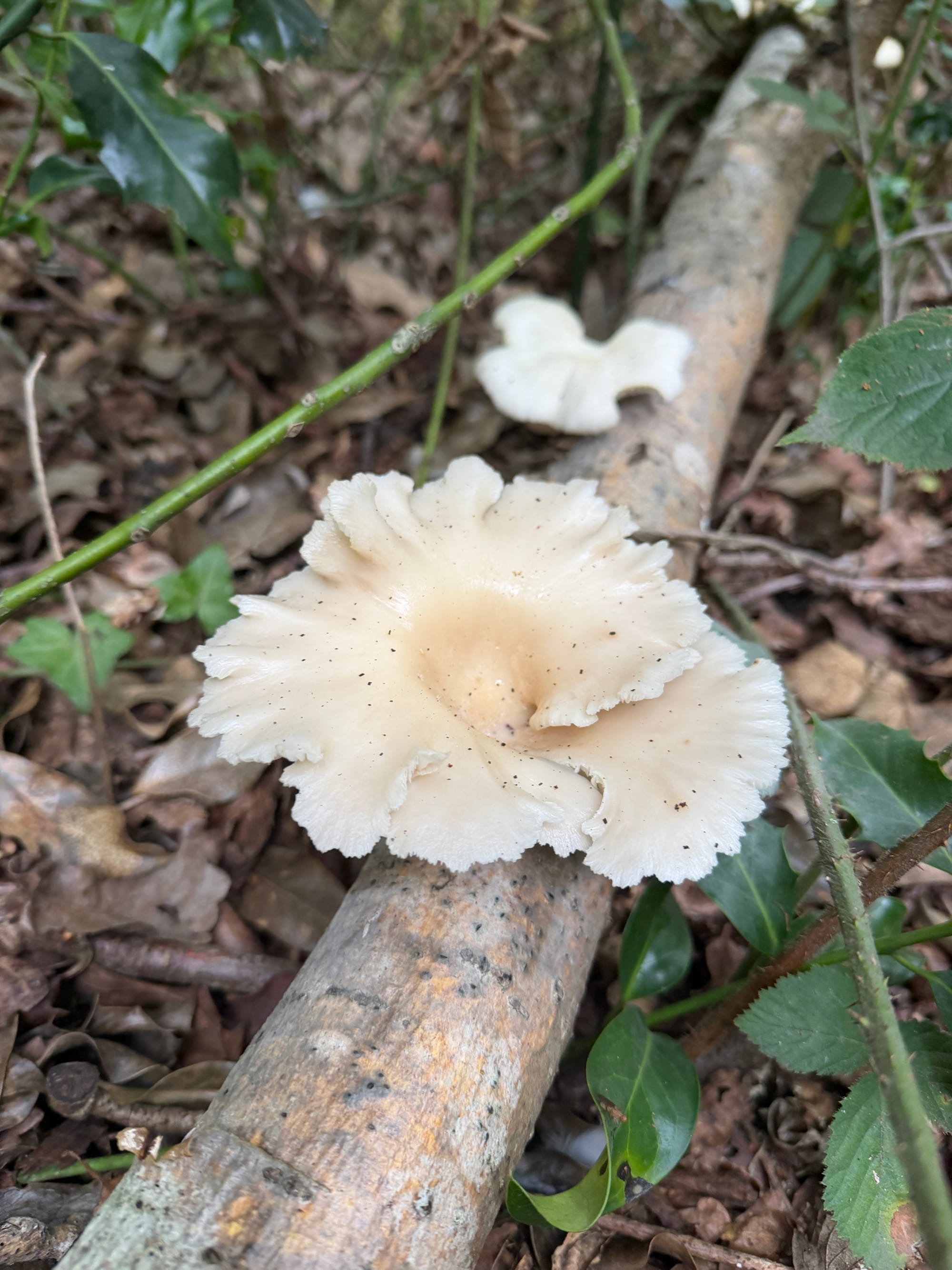
Oysterling
14 September
Facts
Latin: Crepidotus sp.
Size: Cap 1-6cm
Habitat: Dead twigs, broadleaf trees
Note: Wavy cap grows almost stemless, sideways on
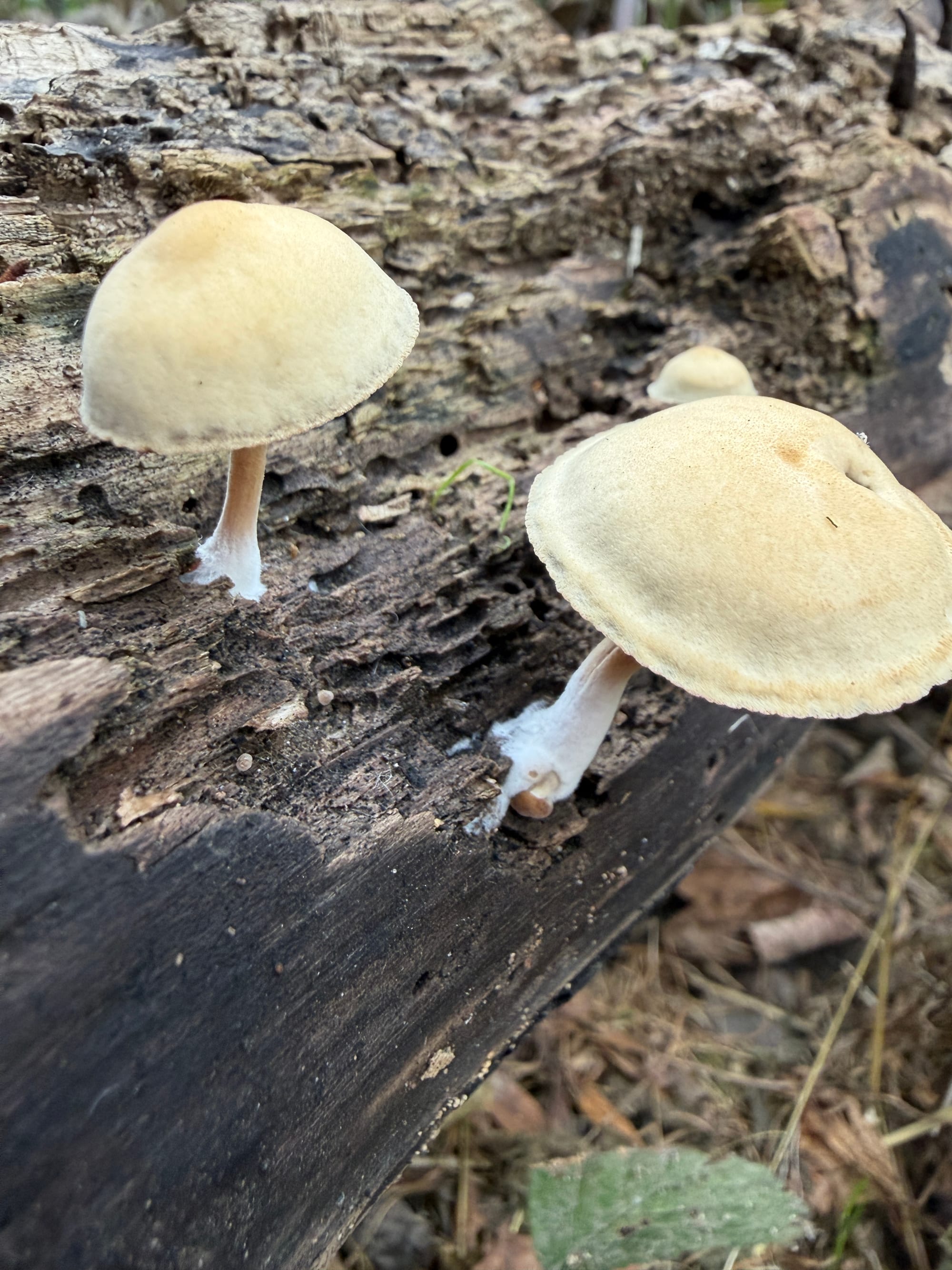
Honey Fungus
14 September
Facts
Latin: Armillaria mellea
Size: Cap 2-10cm
Habitat: Clustered on dead/dying wood
Note: Mycelium is faintly bioluminescent ("foxfire")
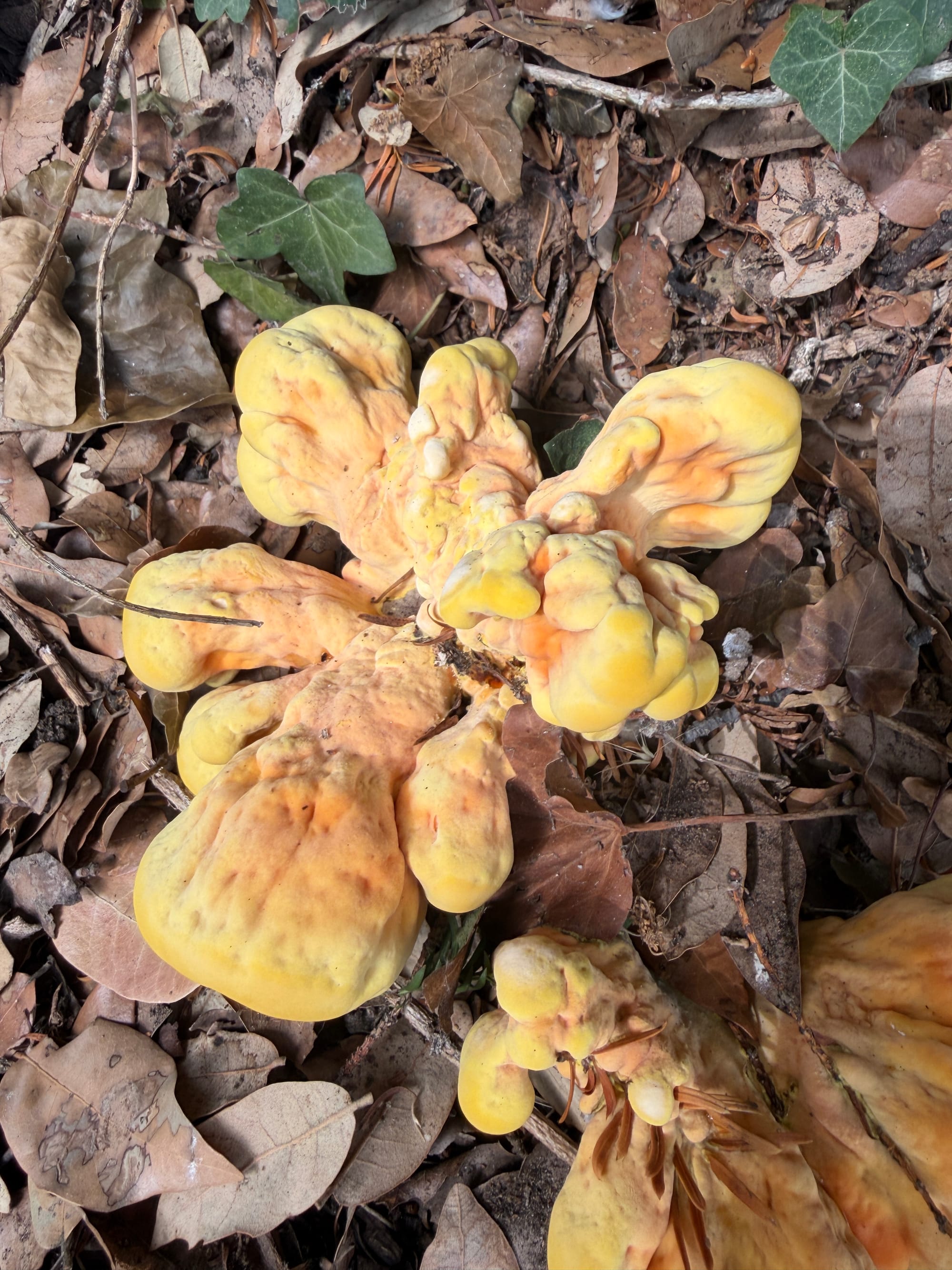
Chicken of the Woods
27 September
Facts
Latin: Laetiporus sulphureus
Size: Fan-shaped brackets 5-20cm across
Habitat: Overlapping tiers on oak, yew, and other broadleaf trees
Note: Bright sulphur-yellow to orange, fading paler with age
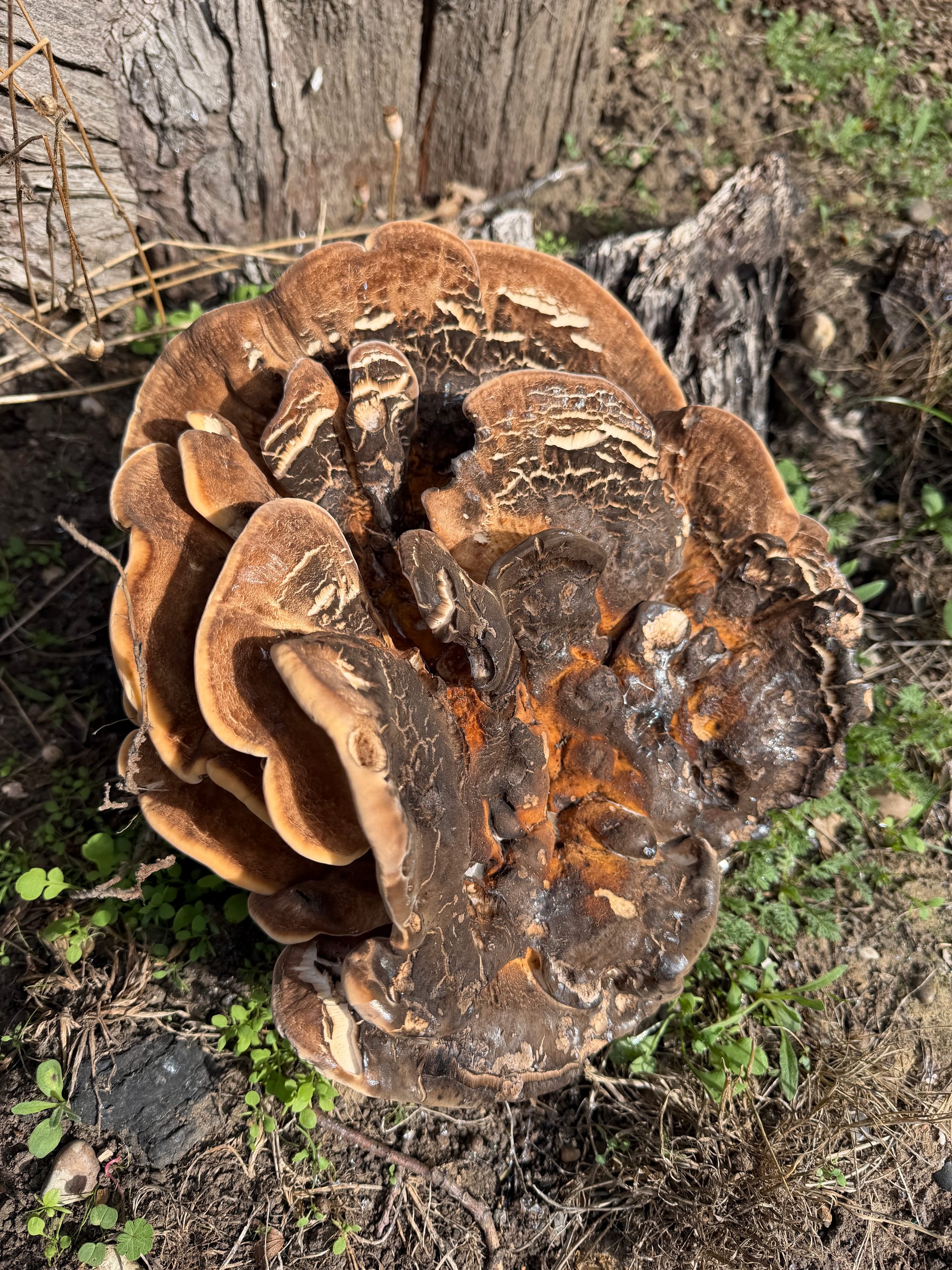
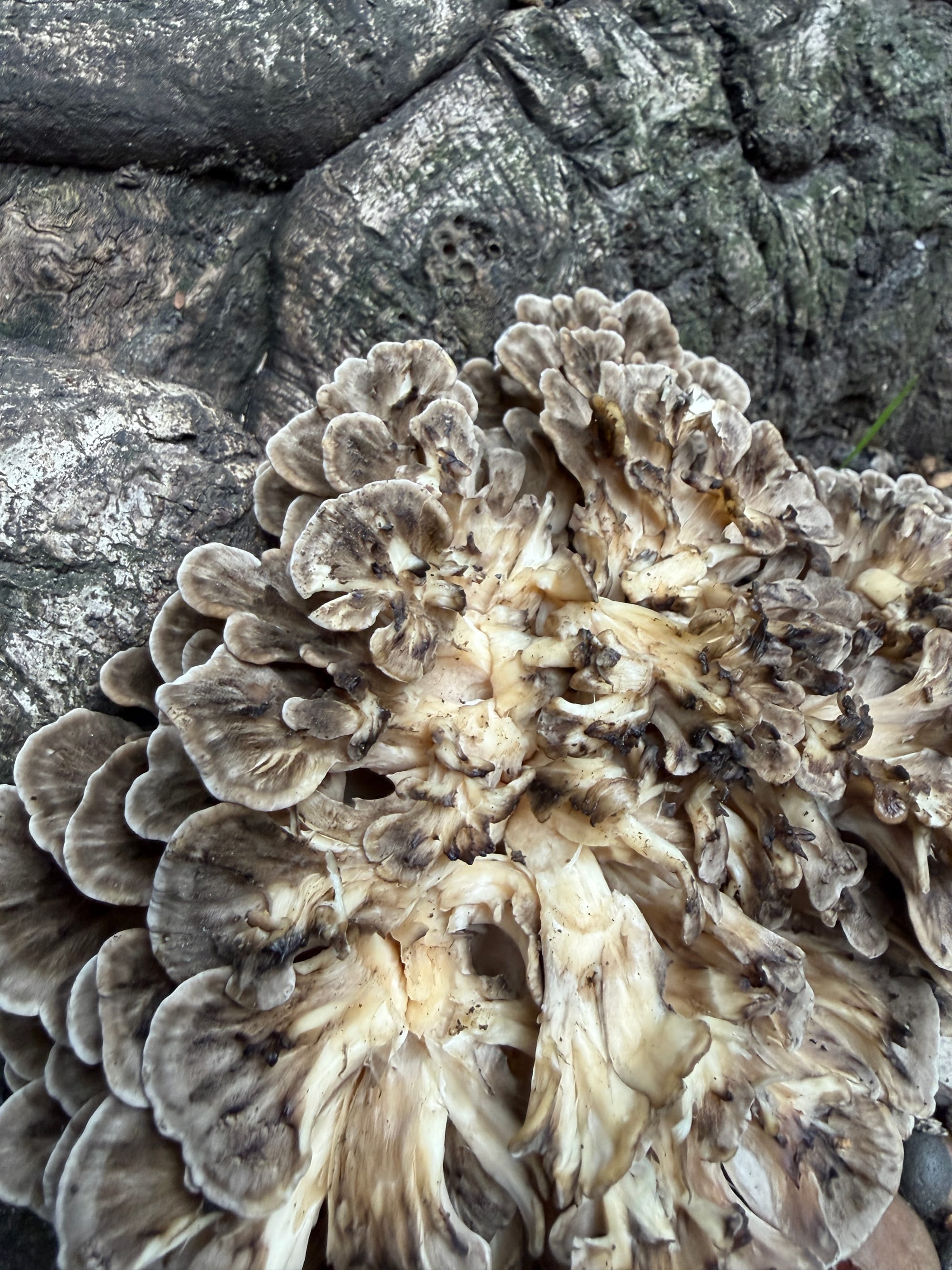
Hen of the Woods
27 September
Facts
Latin: Grifola frondosa
Size: Rosettes to 40cm+, made of many overlapping caps
Habitat: Base of oak and other broadleaf stumps/roots
Note: Also called Maitake; greyish-brown, fan-shaped caps in a tight cluster
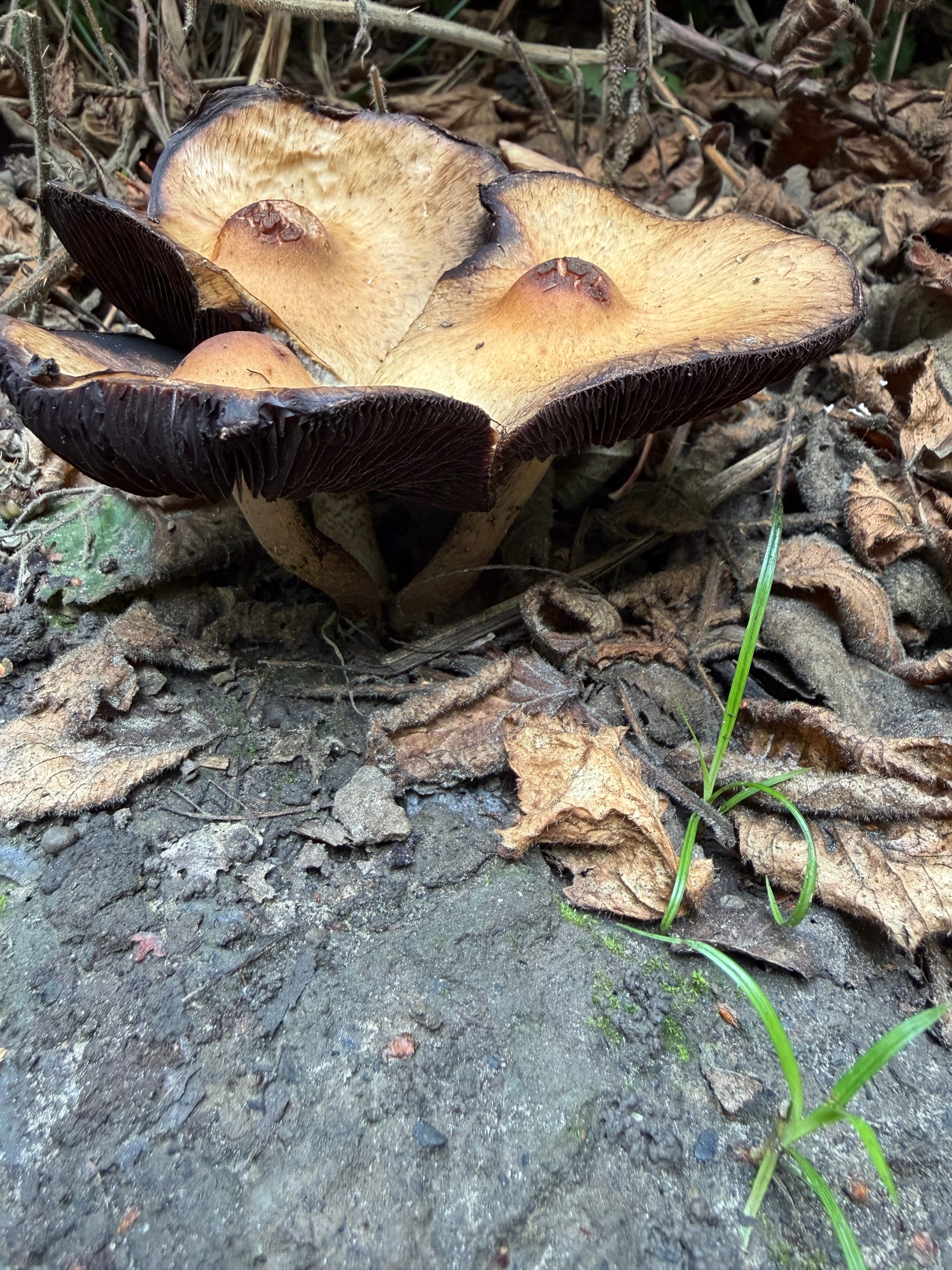
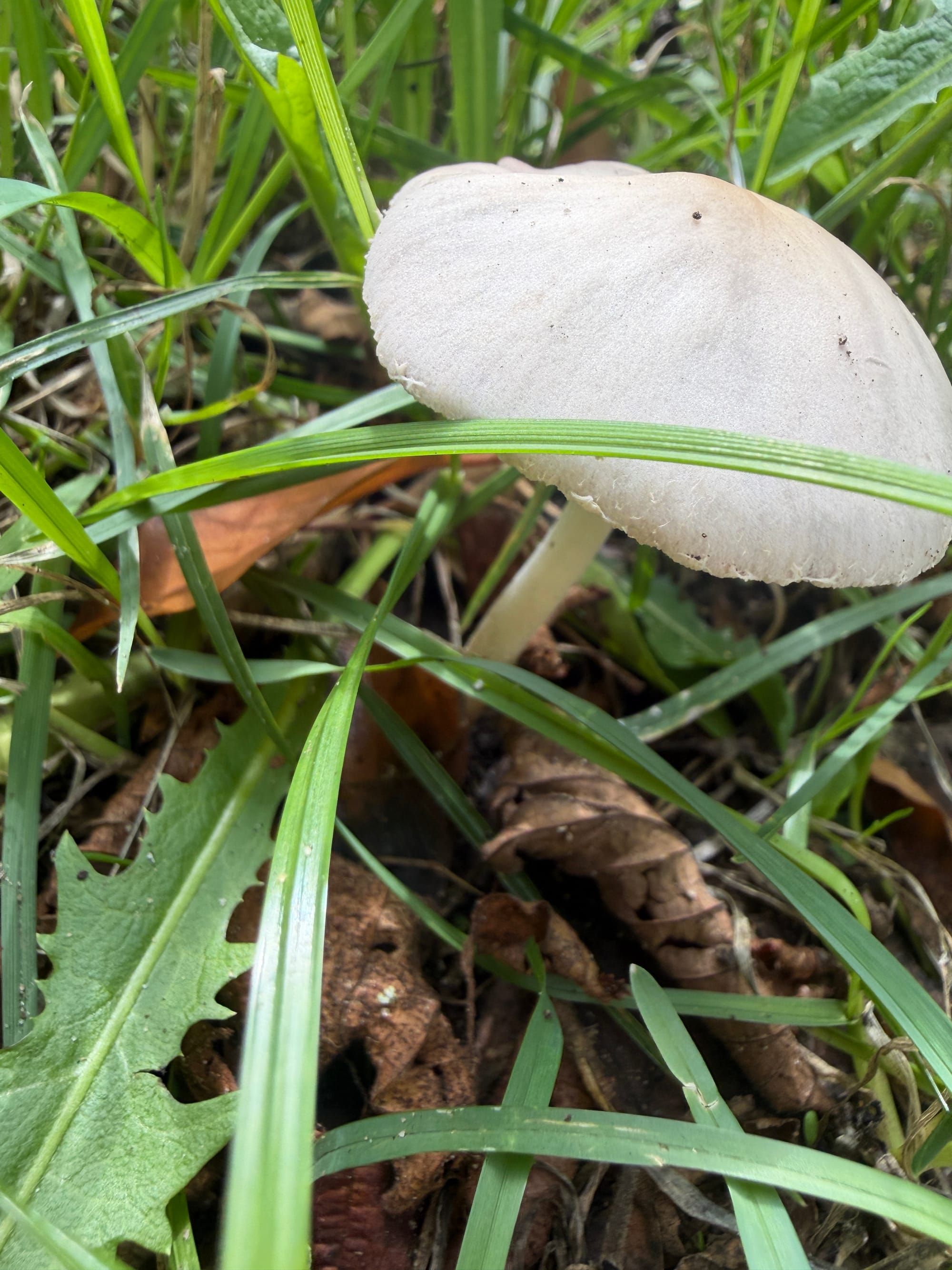
Weeping Widow (tentative ID)
27 September
Facts
Latin: Lacrymaria lacrymabunda
Size: Cap 4-12cm, bell-shaped then flattening, with a retained umbo
Habitat: Grassland and leaf litter, often in small clusters
Note: Named for the black, spore-stained droplets that form on the gill edges when moist; listed as edible but bitter and generally not worth eating. ID not confirmed from photo alone.
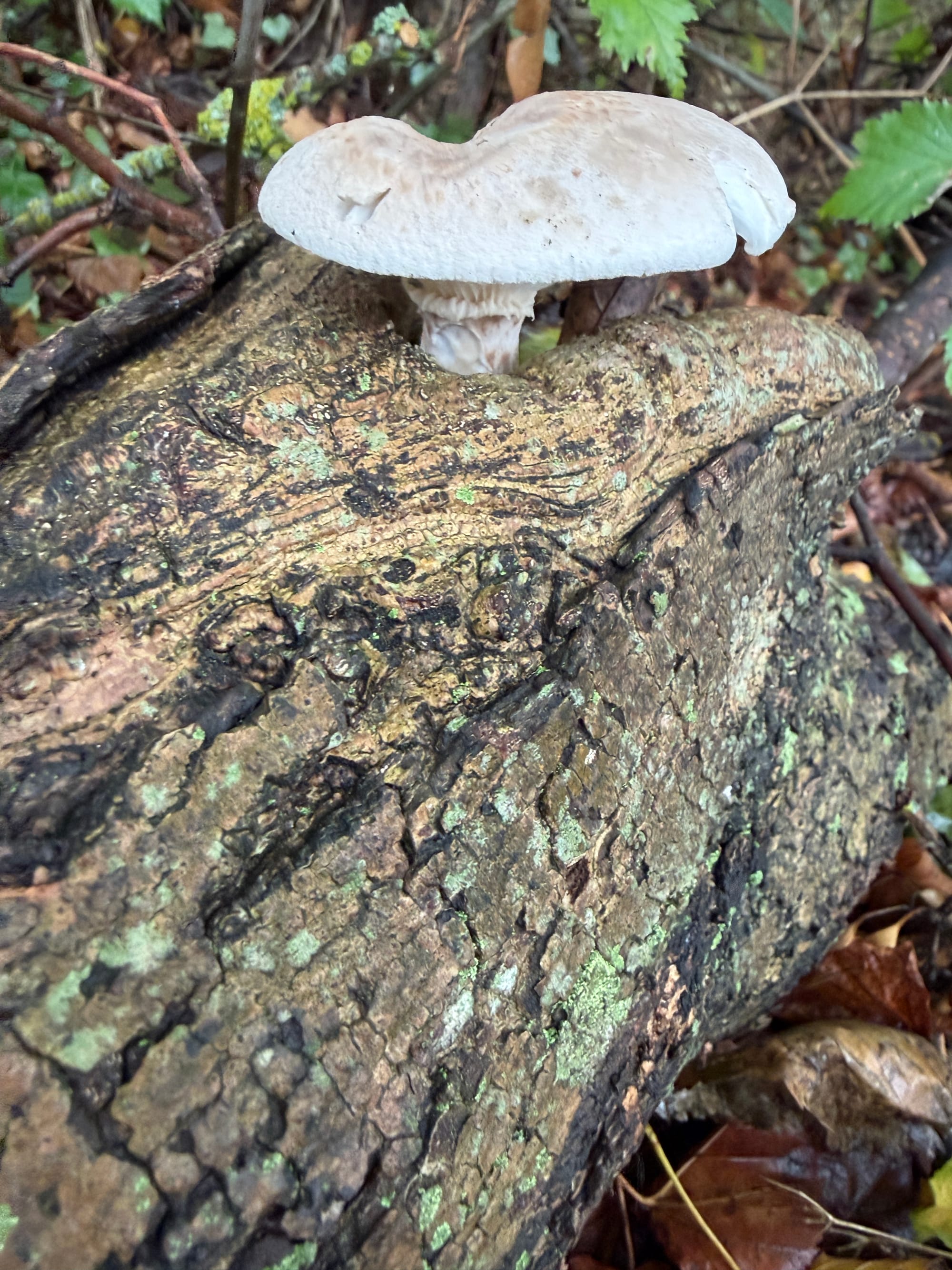
Veiled Oyster (probable)
21 October
Facts
Latin: Pleurotus dryinus
Found: Beckenham Place Park
Size: Cap 5-15cm, off-white with fine woolly scales
Habitat: Bracket-like on trunks and logs of broadleaf trees
Note: Torn veil remnants round the stem and cap edge set it apart from the common oyster
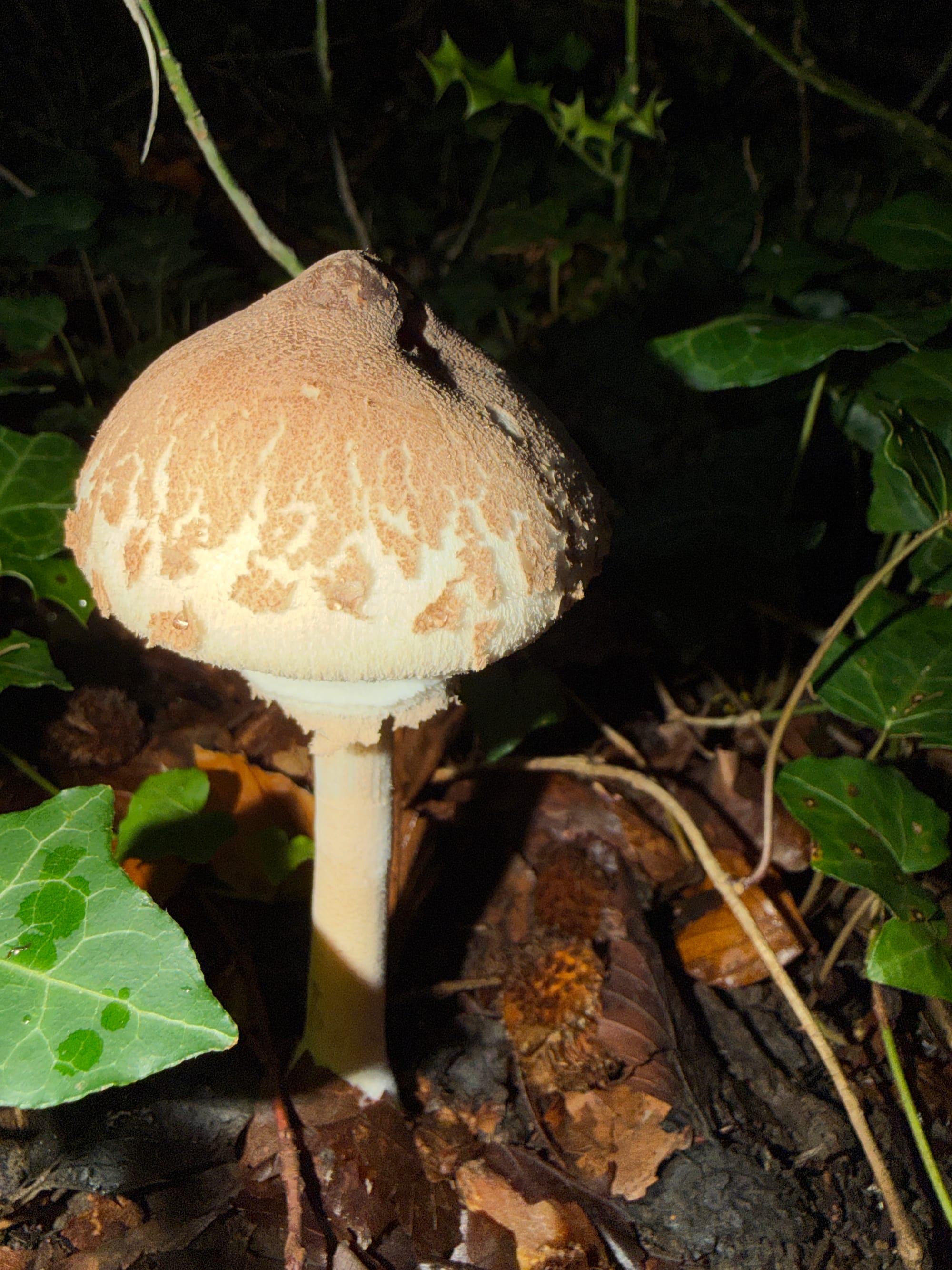
Shaggy Parasol (probable)
20 October
Facts
Latin: Chlorophyllum rhacodes
Found: High Elms Country Park
Size: Cap 8-20cm; smooth stem up to 20cm tall
Habitat: Leaf litter in woodland, hedge bottoms and gardens
Note: Brown scales break up on a white cap; the flesh turns orange-red when cut
Member comments